 Jikke Egberts
 Jikke Egberts


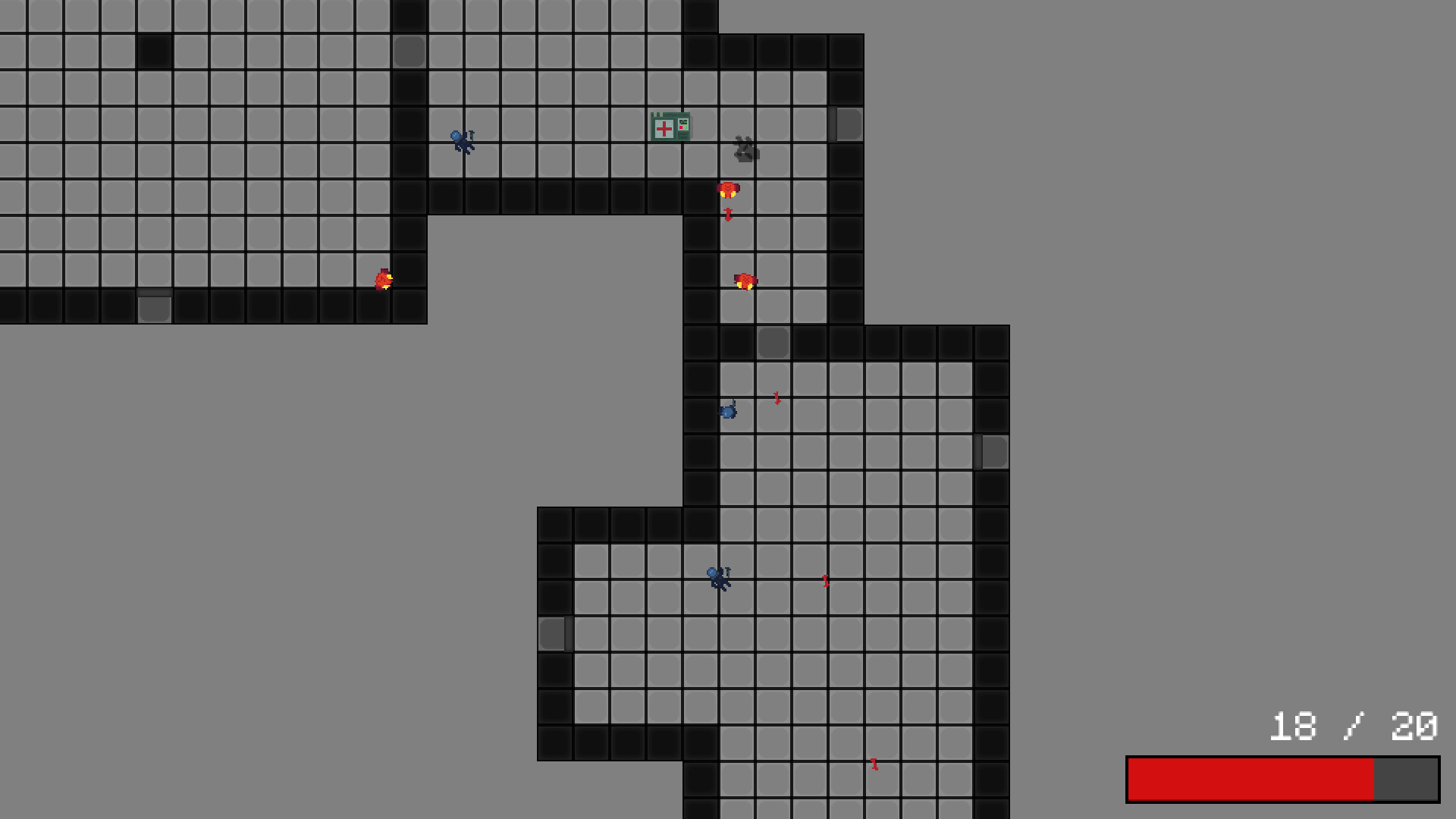
In the team I became responsible for creating the roguelike dungeon. I created a level generation based on rooms. The difficulty came in that we agreed that evenly spaced square rooms were boring. So I had to create a system that could handle rooms with variable size, shape and door positions. I started this design off with creating a UML for the whole system. The sideQuest missions were scrapped but the rest was implemented following the UML.
for this project I choose to make a complicated wall hitbox optimization algorithm instead of checking surrounding tiles to set an algorithmic challenge for myself since algorithms was a talking point in the class at that point. It optimizes the space that the colliders take up, so instead of saving for each tile if it is a wall with a collider, is generates filling rectangles for which only 4 variables have to be saved. The bigger the area which is filled with walls, the more efficient this algorithm becomes.
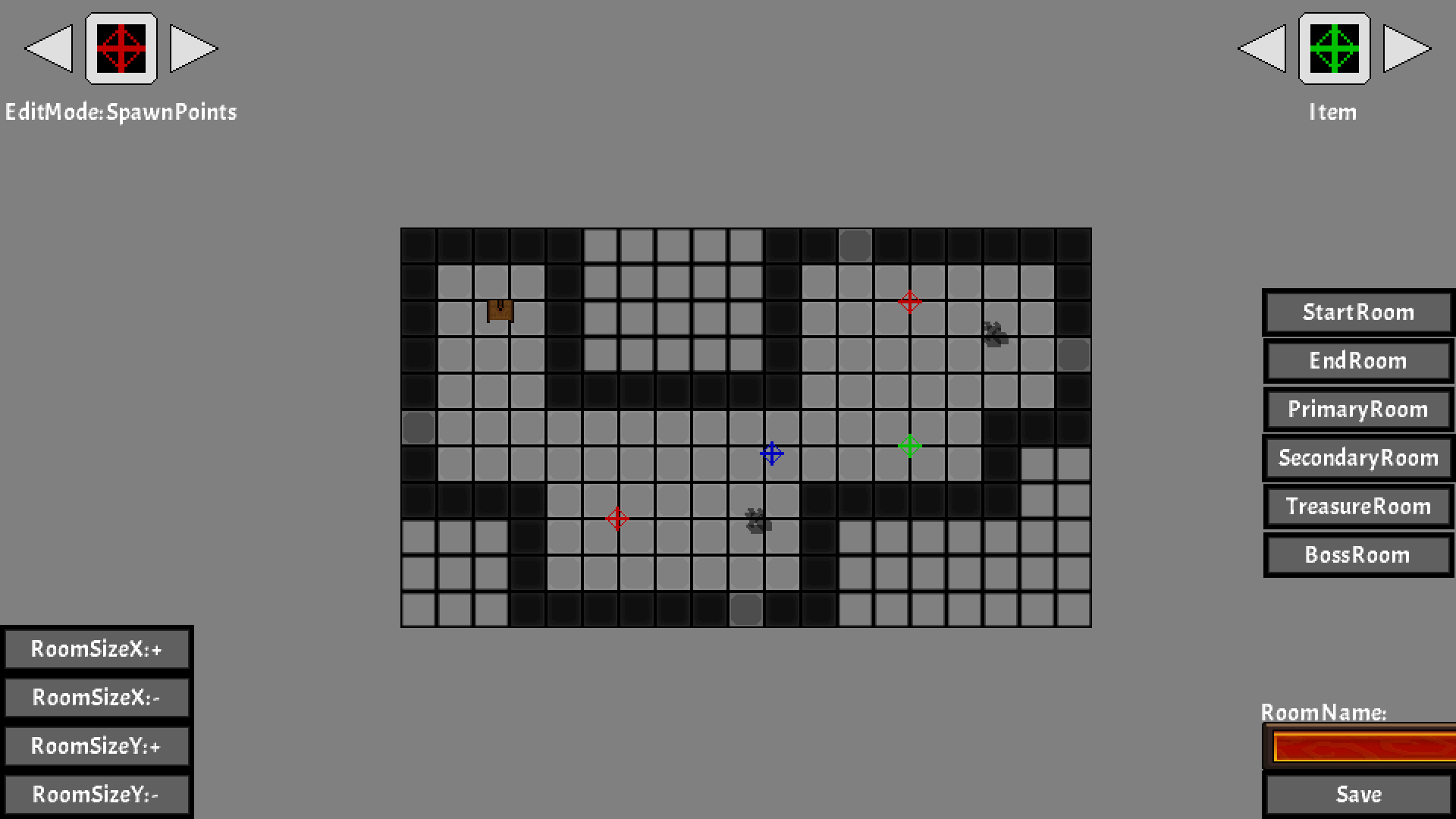
We wanted to design and make our own rooms so for that I also needed to make a room editor and saving system. For this i created a separate room saver class which handles all the saving. It makes use of a DataContractSerializer which saves and loads the rooms. It however was not possible to make the texture2D serializable so i had to separately save the object and the texture. The object gets saved as an xml object and the texture gets saved as a png, which on load get recombined to a single room object.
Now that i had rooms, they had to be combined, i did this in a separate level builder class. Following the way we designed our level, it first adds the starting room, then a couple of primary rooms which end in the end room. Then it adds secondary rooms to fill up the level and make interesting side ways instead of a linear path. This way of generating a level makes sure that there is always a path of a certain length to the end room, but also makes the level interesting. If we added the side-quests these would also be relatively easy to add to levels, by adding a new generating step after the secondary rooms where the side-quest rooms are added.